
Uncategorized
What Does an Air Receiver Do in a Compressed Air System?
Oct
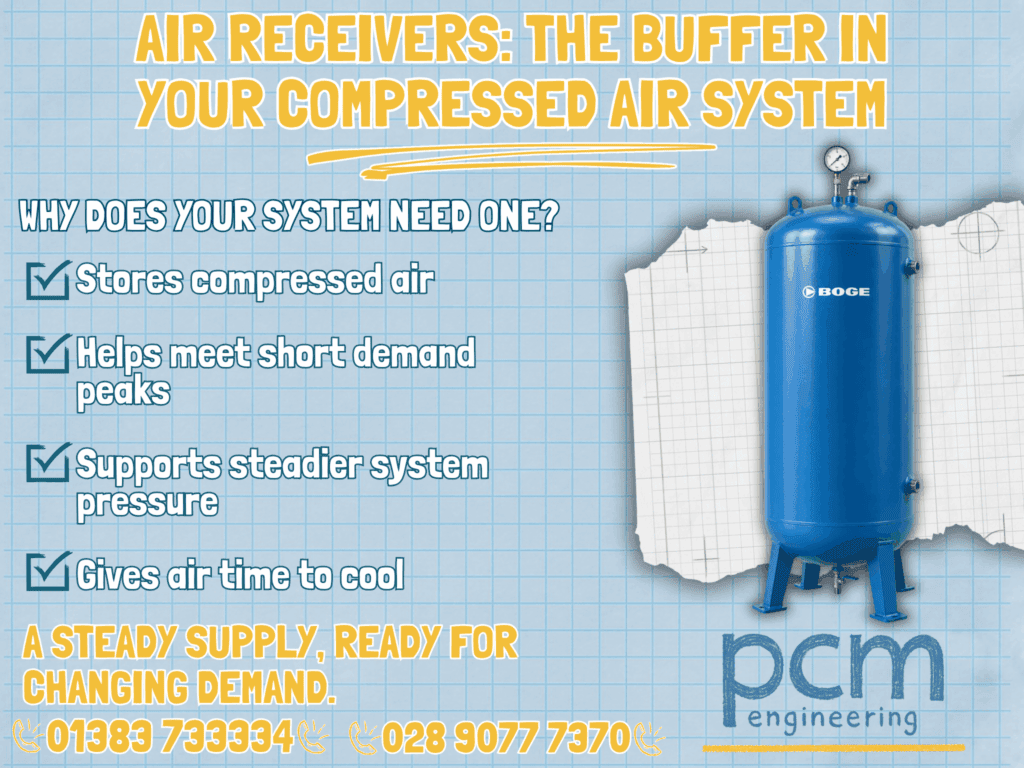
An air receiver is the storage tank in a compressed air system. It holds compressed air between the compressor and the equipment using it, helping the system cope with short periods of higher demand.
While the compressor produces compressed air, the receiver acts as a buffer. When demand rises, stored air can help supply the system; when demand falls, the compressor can replenish the receiver. This can help reduce pressure fluctuations and prevent the compressor from reacting to every brief change in demand. cagi.org
Why does a compressed air system need a receiver?
A correctly selected receiver can support a system in several ways:
- Provide a reserve of compressed air for short-term demand peaks.
- Help stabilise pressure as air demand changes.
- Support compressor operation by helping avoid excessive short cycling.
- Allow the air to cool, which can help moisture condense before it reaches downstream equipment.
A receiver is only one part of the system, though. It does not replace an air dryer or filtration. Where moisture or contamination could affect equipment or the end product, the right air treatment and condensate management are still important. cagi.org
Wet and dry air receivers
In some systems, a wet receiver is installed before the air dryer. It stores untreated air and can provide space for cooling and condensate separation.
A dry receiver is installed after the dryer and stores treated air for use around the site. Some systems use one receiver, while others use both. The right arrangement depends on the compressor, air treatment, demand pattern and required air quality. atlascopco.com
How do you choose the right size?
There isn’t one receiver size that suits every business. Selection depends on factors such as compressor output, system pressure, how quickly demand changes, the length of demand peaks and the requirements of the equipment being supplied. A tank that is too small may not provide the buffer the system needs; choosing a tank without considering the wider system may not solve the underlying issue.
A review of the system can help establish whether the receiver size and position suit the actual demand.
Don’t forget the drain and routine checks
As compressed air cools, condensate can collect in the receiver. The drain needs to be appropriate for the system and kept in working order. A receiver should also be inspected and maintained in line with the applicable requirements and the equipment manufacturer’s guidance.
If your system has pressure fluctuations, frequent compressor cycling or changing demand, it may be worth reviewing how the receiver fits into the complete compressed air setup.
PCM Engineering supports businesses in Belfast and Dunfermline with compressed air equipment and technical product advice. Contact the team to discuss your system. The company lists Belfast on 028 9077 7370 and Dunfermline on 01383 733334.
We are fully BCAS compliant – BCAS | The Voice of British Compressed Air
