
News
Hydraulic Quick-Connect Couplings in Northern Ireland: What to Check Before You Choose
Nov
Hydraulic quick-connect couplings make it easier to connect and disconnect hoses and equipment. Choosing the right coupling matters: a poor match can restrict flow, leak, or fail to suit the system’s operating conditions.
For businesses across Northern Ireland, here are five checks to make before specifying a hydraulic quick-connect coupling.
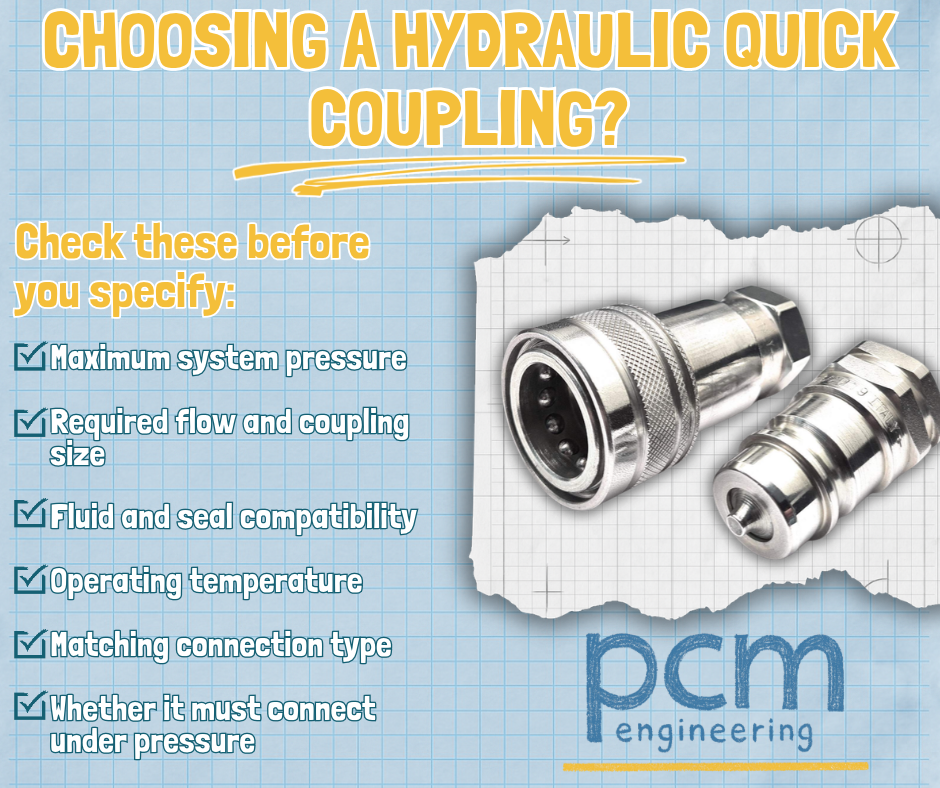
1. Check the system pressure
Choose a coupling rated for the maximum pressure it will experience, including pressure spikes where relevant. Check the ratings for both halves of the coupling and make sure they suit the application.
2. Match the coupling to the required flow
The coupling size should suit the system’s flow requirements. An undersized connection can restrict flow and contribute to pressure loss, so consider the flow rate as well as the hose or port size.
3. Check fluid and seal compatibility
The coupling body and seal materials need to be suitable for the hydraulic fluid in use. Compatibility can vary by fluid type, so check the manufacturer’s information before selecting a material.
4. Consider temperature and working conditions
Check the coupling’s temperature range against the system’s operating conditions. Dust, moisture, chemicals and outdoor use may also affect which coupling style is suitable.
5. Confirm the connection type and how it will be used
Make sure the two coupling halves use the correct matching connection and standard. If the coupling must be connected or disconnected while pressure remains in the system, select a model specifically designed for that condition. Not all quick-connect couplings are made for it. parker.com
The right choice depends on the full application, not just the connection size. PCM Engineering supplies a range of hydraulic and fluid quick-connect couplings. If you’re sourcing couplings for a business in Northern Ireland, share the fluid, pressure, flow, temperature and connection details with the team to help identify a suitable option.
View hydraulic and fluid quick-connect couplings or contact PCM Engineering.
We are fully BCAS compliant – BCAS | The Voice of British Compressed Air
