Uncategorized
What Is an FRL Unit and Why Does Your Pneumatic System Need One?
Sep
Compressed air may look clean, but it can carry moisture, dirt, oil and other contaminants capable of damaging pneumatic equipment. Pressure can also fluctuate as demand changes throughout a compressed-air system.
An FRL unit helps prepare the compressed air before it reaches pneumatic tools, valves, cylinders and machinery. By improving air quality and controlling pressure, the correct air-preparation equipment can support reliable performance and reduce unnecessary wear.
What Does FRL Mean?
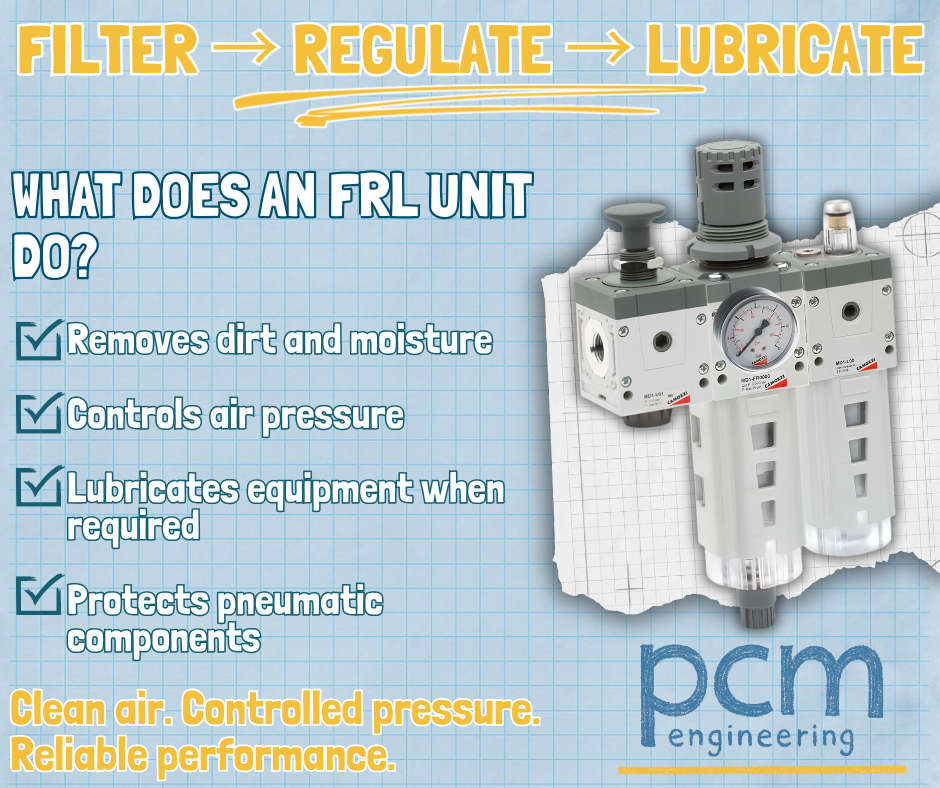
FRL stands for Filter, Regulator and Lubricator. These three components can be installed together as a complete assembly or selected individually, depending on the requirements of the application.
Each component performs a different function:
- The filter removes contaminants and separates moisture from the compressed air.
- The regulator controls the downstream air pressure.
- The lubricator introduces a controlled quantity of oil into the airflow when lubrication is required.
Together, they help ensure that downstream pneumatic equipment receives air at the appropriate quality and pressure.
1. The Filter
The filter is normally the first stage of an FRL assembly. It is designed to capture solid particles and separate condensed moisture before they reach sensitive components.
Contamination within a pneumatic system can cause:
- Blocked or restricted valves
- Damage to seals
- Irregular cylinder movement
- Increased component wear
- Reduced product quality
- Unplanned maintenance and downtime
Filters are available in different sizes and filtration grades. The correct option will depend on the air-quality requirements, flow rate and sensitivity of the equipment being protected.
The filter bowl must also be drained regularly unless the unit is fitted with a suitable automatic drain.
2. The Regulator
Different pneumatic tools and components may require different operating pressures. A pressure regulator reduces the incoming supply to a suitable downstream pressure and helps maintain it during normal operation.
Supplying excessive pressure does not necessarily improve performance. It can increase air consumption, place unnecessary stress on components and raise operating costs.
A correctly selected and adjusted regulator helps equipment operate within its intended pressure range. A pressure gauge is commonly fitted so operators can monitor and adjust the setting when required.
3. The Lubricator
Some pneumatic equipment requires a controlled supply of oil to reduce friction and protect internal moving parts. A lubricator introduces a fine oil mist into the compressed air, which is then carried downstream to the equipment.
However, lubrication is not required for every pneumatic system. Many modern components are supplied with lifetime lubrication, while some manufacturing, painting, food-processing or clean-air applications must remain free from introduced oil.
Once oil has been added to an airline, removing it further downstream can be difficult. A lubricator should therefore only be installed when it is appropriate for the equipment and application.
Always check the recommendations provided by the equipment manufacturer before adding airline lubrication.
Why Is Air Preparation Important?
Compressed-air treatment is about more than keeping the air clean. A properly selected FRL unit can help:
- Protect pneumatic valves, cylinders and tools
- Maintain consistent operating pressure
- Reduce premature wear
- Improve equipment reliability
- Minimise unexpected downtime
- Lower unnecessary compressed-air consumption
- Extend the working life of system components
Poor air quality or incorrect pressure can create recurring problems throughout a pneumatic system. Installing suitable air-preparation equipment close to the point of use can provide targeted protection for individual machines or production areas.
Choosing the Correct FRL Unit
An FRL assembly should be matched to the application rather than selected on physical size alone. Important factors include:
Flow Rate
The unit must allow sufficient airflow for the equipment it supplies. An undersized FRL can restrict flow and create pressure drop, affecting machine performance.
Port and Pipe Size
Connection sizes should suit the existing pipework and required flow. Reducing the connection size unnecessarily may restrict the system.
Operating Pressure
Every component must be rated for the maximum supply pressure and capable of providing the required downstream pressure.
Filtration Level
General workshop equipment may have different filtration requirements from precision instrumentation, painting processes or specialist manufacturing applications.
Drain Type
Manual, semi-automatic and automatic drain options are available. The right choice will depend on moisture levels, maintenance arrangements and operating conditions.
Materials and Environment
Temperature, chemicals, outdoor exposure and the risk of impact should all be considered when choosing bowl materials and other construction features.
Lubrication Requirements
Confirm whether the equipment actually requires lubricated air before including a lubricator in the assembly.
FRL Maintenance Should Not Be Overlooked
Even correctly selected air-preparation equipment requires routine inspection. Filters can become blocked, bowls can fill with condensate and regulator settings may be altered accidentally.
Regular checks should include:
- Inspecting and draining filter bowls
- Replacing filter elements when required
- Checking for air leaks
- Confirming the correct pressure setting
- Monitoring lubricator oil levels where fitted
- Examining bowls, seals and housings for damage
A neglected FRL unit may eventually restrict airflow or fail to protect downstream equipment effectively.
Find the Right Air-Preparation Equipment
The correct FRL unit can make a significant difference to the performance, efficiency and reliability of a pneumatic system.
PCM Engineering supplies filters, regulators, lubricators and complete FRL assemblies for a wide range of industrial and workshop applications. Our team can help you identify suitable air-preparation equipment based on your pressure, flow, connection and filtration requirements.
Contact PCM Engineering today or explore our air-preparation range online.
We are fully BCAS compliant – Welcome
